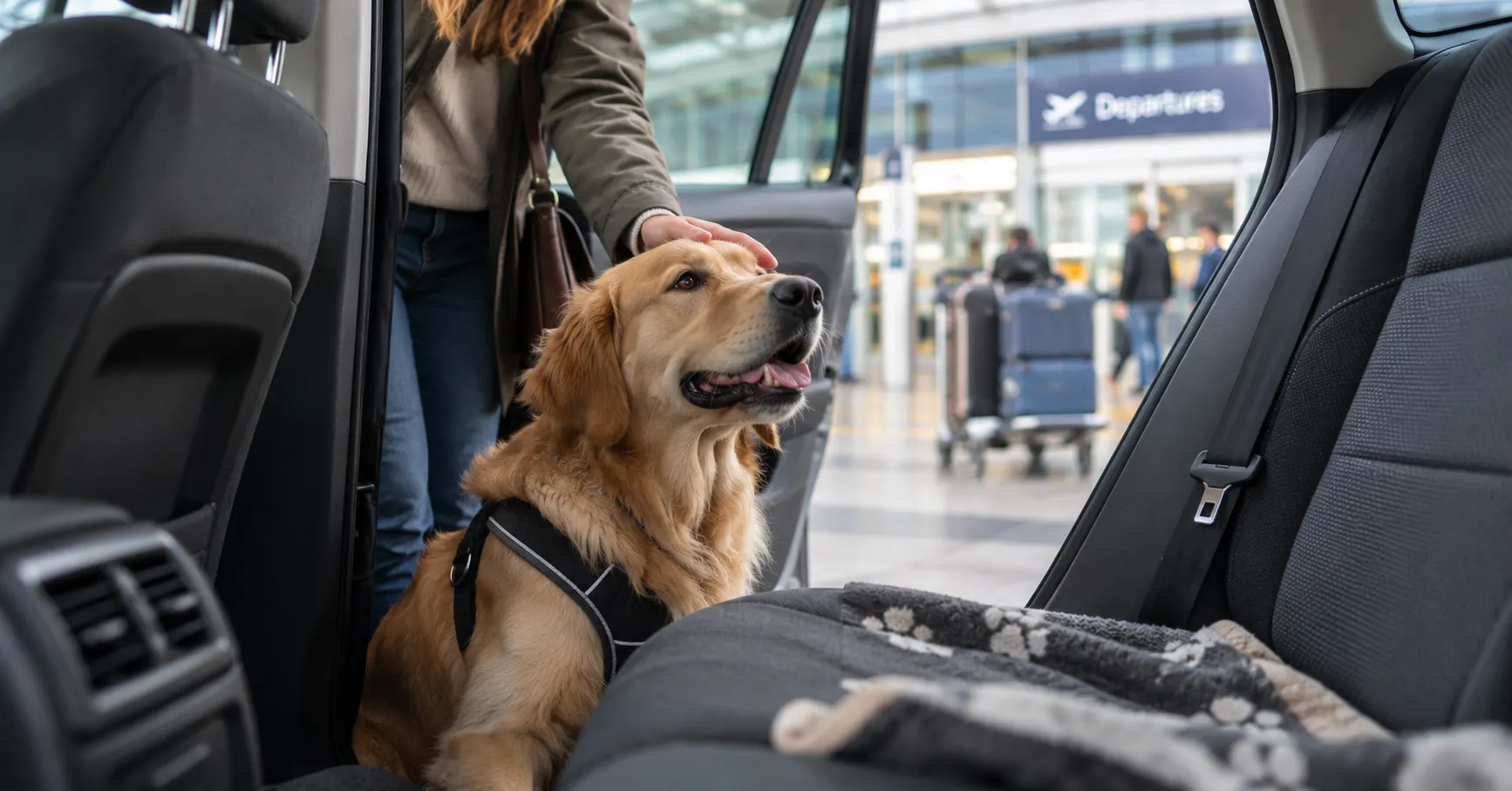
Packing for a flight is stressful enough without wondering if your dog will even be allowed in the taxi. Will you need a certain car? Will there be a fee? Will the driver say no at the last minute?
It's a fair worry, too. Not every driver accepts a pet dog, and the rules around a dog-friendly taxi aren't always spelled out anywhere obvious, so most owners end up guessing right up until the car pulls up.
This guide clears that up. It covers what UK law actually says about assistance dogs and pet dogs, answers the "can I take a dog in a taxi" question properly, and adds practical tips so you're not guessing on the day.
So, Will Taxis Take Dogs?
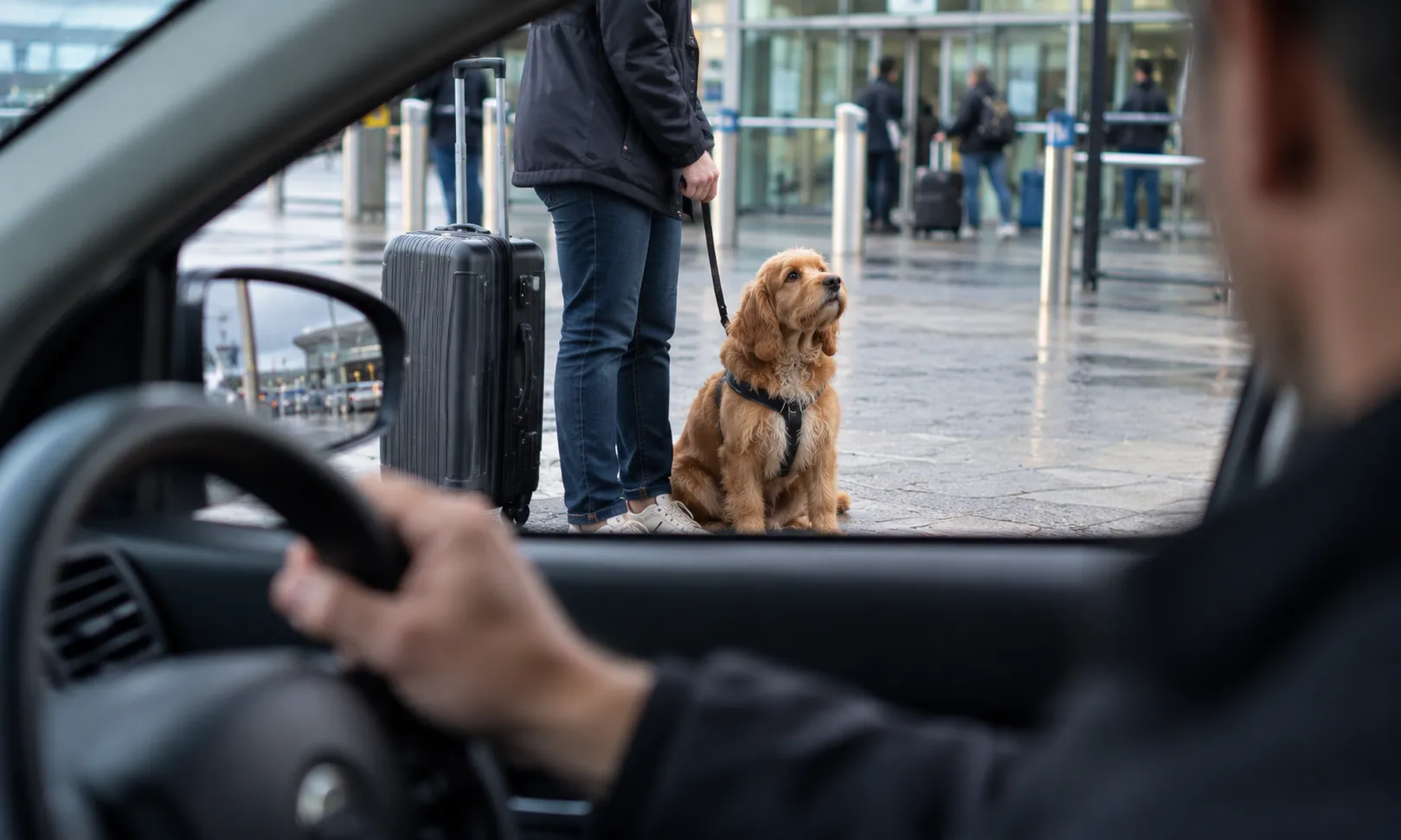
The short answer is yes, taxis will take dogs in most cases. The full answer depends on whether your dog is an assistance dog or a family pet. That single distinction decides almost everything else in this guide.
If your dog is an assistance dog, the driver is legally obliged to carry it, no exceptions beyond a rare medical exemption. If it's a pet, most operators will still take it, but it helps to say so in advance.
You're not alone in wondering about this either. It's one of the most common questions travellers ask before an airport trip, mainly because nobody wants to turn up with their dog only to be told no.
Assistance Dogs Are a Legal Right, Not a Request
If you're travelling with an assistance dog, a driver cannot refuse you. Under the Equality Act 2010, licensed taxi and private hire drivers in England and Wales must carry assistance dogs, including guide dogs, at no extra cost.
A driver who refuses without a valid medical exemption certificate commits an offence. Councils have continued to take enforcement action against drivers who break this rule, with fines of up to £1,000.
You also don't need to carry ID or documentation to prove your dog is an assistance dog, though many owners do so anyway because it speeds up the conversation with a driver who hasn't met them before.
Your dog should also be able to sit with you for the whole journey, usually in the footwell for safety.
What Counts as an Assistance Dog?
Assistance dogs cover more than guide dogs for blind or partially sighted passengers. Hearing dogs, and dogs trained by organisations such as Dogs for the Disabled, Support Dogs, or Canine Partners, all carry the same legal protection.
There's no official UK register or certificate that proves a dog is an assistance dog, so drivers can't demand paperwork before letting you travel.
Many assistance dogs wear a harness or jacket showing the training organisation, which simply makes recognition quicker for a new driver.
Pet Dogs Are Down to the Operator
If you're bringing a family pet, the picture changes. UK law doesn't require a taxi or private hire driver to accept a pet dog, as it does for an assistance dog, and drivers are also allowed to charge more if they do accept one.
This is standard across the industry, not something unique to any one company.
You might be wondering why this matters for your booking. In practice, it means the smoothest way to travel with a dog-friendly taxi is to say so up front, so whoever you book with can assign the right driver and vehicle.
Looking for a Dog-Friendly Taxi Near You?
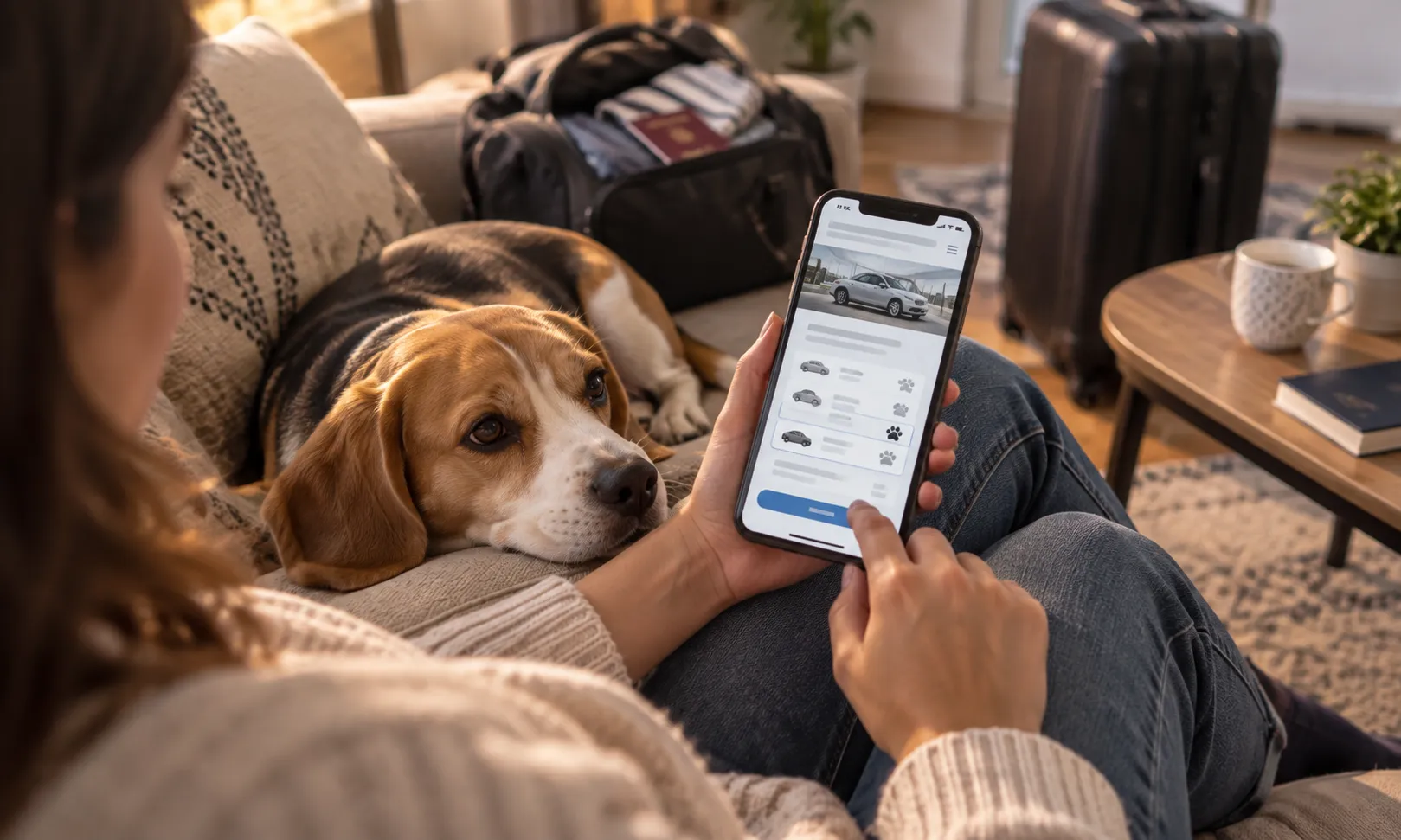
Searching "dog friendly taxis near me" usually brings up a mix of operators, and not all of them clearly list a pet policy on their websites. The safest approach is still to ask directly rather than assume either way.
A quick call, WhatsApp message, or note in your online booking form does the job. It also means the operator can assign a driver who's genuinely comfortable with dogs, rather than one who tolerates them.
Practical Tips for Travelling With Your Dog
A calm dog makes for a calm journey, and a little preparation on your part goes a long way when you're already tight on time before a flight.
Crate, Harness, or Lead
Keep your dog secure with a crate, a harness clipped to a seatbelt fitting, or, at a minimum, a well-fitted lead and collar. It protects your dog if the driver has to brake suddenly, and it protects the vehicle's upholstery too, which matters when the same car carries other passengers later.
Timing Your Pickup Around Your Dog's Needs
Your dog will generally travel better on an empty-ish stomach and after a toilet break, so build in a few extra minutes before your pickup time. Early morning flights are common out of Manchester Airport, and a dog that's had a short walk beforehand tends to settle faster once the journey starts.
Hygiene and Shared Vehicle Etiquette
Bring a travel blanket or seat cover, and a small bag for any mess, so you leave the vehicle clean for the next passenger. Private hire vehicles are inspected regularly, and a bit of consideration from you, as the owner, helps maintain standards for everyone who books after you.
How This Looks When You Actually Book
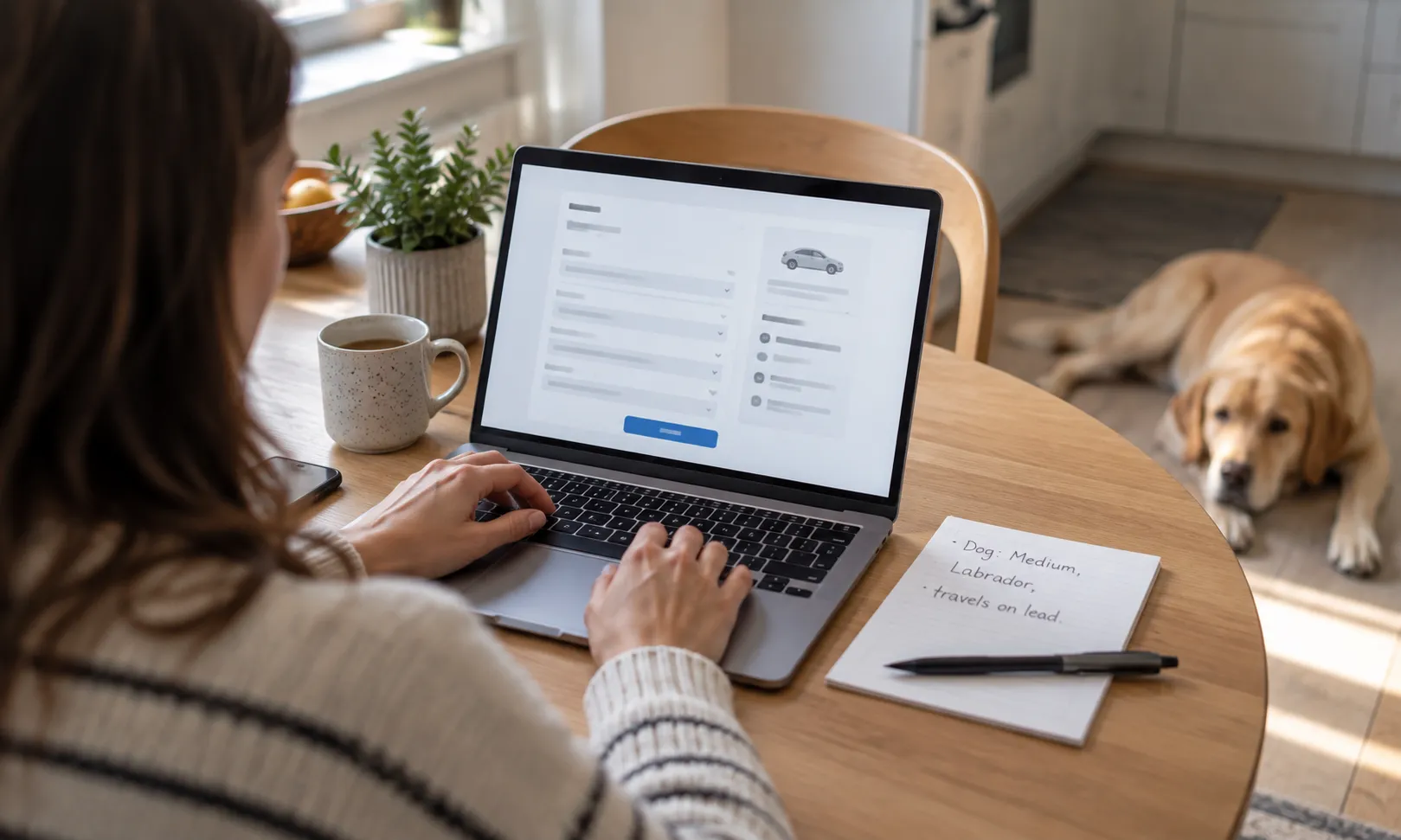
One example of how this comes together is Manchester 24/7 Transfers, a licensed private hire operator covering Manchester Airport Terminals 2 and 3. The same principles above apply the moment you book, and knowing what to expect in advance just makes the whole process quicker.
Letting the Team Know Before You Travel
If you're flying out with your dog, or landing back home with one, it helps to include your dog's size, breed, and whether it'll travel in a carrier or on a lead in your booking notes. This is standard practice across the private hire industry, and it avoids any awkwardness at the pickup point.
Choosing the Right Vehicle for the Trip
Vehicle options typically include a Saloon, Estate, Executive, or an 8-seater Mini Bus / People Carrier. If you've got a larger dog or you're travelling with a crate, you'll usually have more room in the Estate or the Mini Bus, since there's more boot and legroom to work with.
If you're travelling with an assistance dog, the meeting point still applies as normal: Terminal 2 at the currency exchange and Terminal 3 at the main Information Desk. There's never a charge for the dog itself.
What If Your Journey Doesn't End at the Airport?
Plenty of passengers travel with a dog well beyond the terminal doors, connecting on to towns and cities across the North West and further afield. Whether you're heading to Liverpool or Leeds, fixed pricing applies the same way it would on a standard airport run.
Mentioning your dog at booking matters even more on longer legs, since your dog will be in the vehicle for a while. Longer journeys reward a bit more planning on your part, mainly around comfort breaks, but the booking process itself doesn't change.
Booking a Dog-Friendly Manchester Airport Taxi
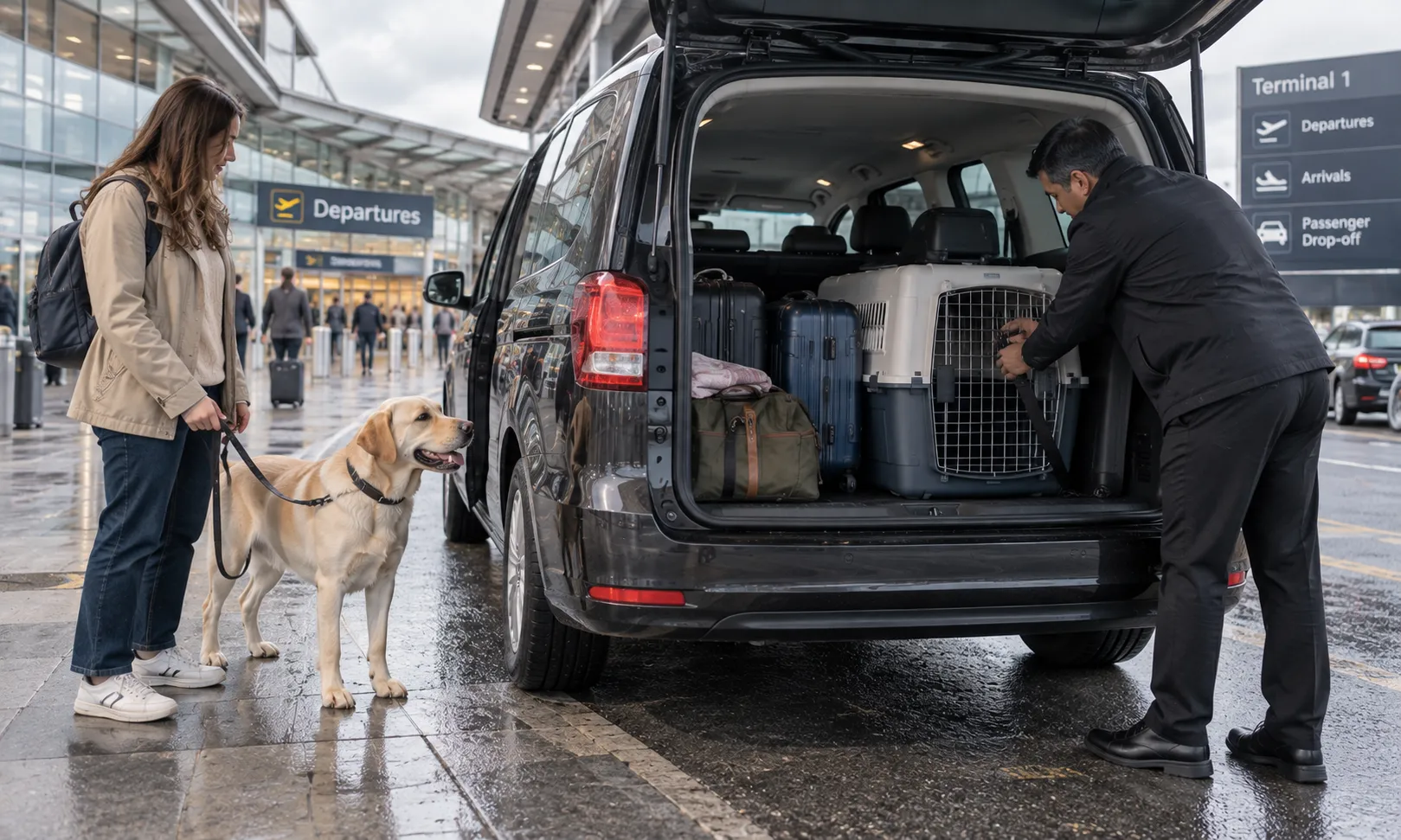
Getting your dog to Manchester Airport, or collecting it from it, doesn't need to be complicated. Confirm your dog's details at booking, pick a vehicle with enough space, and you've covered most of what matters.
Key Takeaways
Dogs and airport taxis can absolutely mix, as long as you sort the basics in advance. If you're travelling with an assistance dog, it travels free and without question under UK law.
If you're bringing a pet dog, it can travel too, most of the time, once your driver knows what to expect and you've got the right vehicle lined up.
Confirming the details in your booking notes and choosing a vehicle with enough space is the one habit worth building before travel day.
Manchester 24/7 Transfers
Fixed fares to and from Manchester Airport. No surge pricing, no hidden charges. Meet & Greet and flight tracking included as standard. Let us know about your dog in the booking notes.
Frequently Asked Questions

Simon is a Project Manager and airport transfer specialist at Manchester 24/7 Transfers. With years of experience navigating the private hire industry across Greater Manchester and the North of England, he's the mastermind behind getting thousands of passengers to Manchester Airport on time, every year. When he's not streamlining travel logistics, he's sharing his top tips for stress-free journeys and local travel insights right here on the blog.
View full profile →