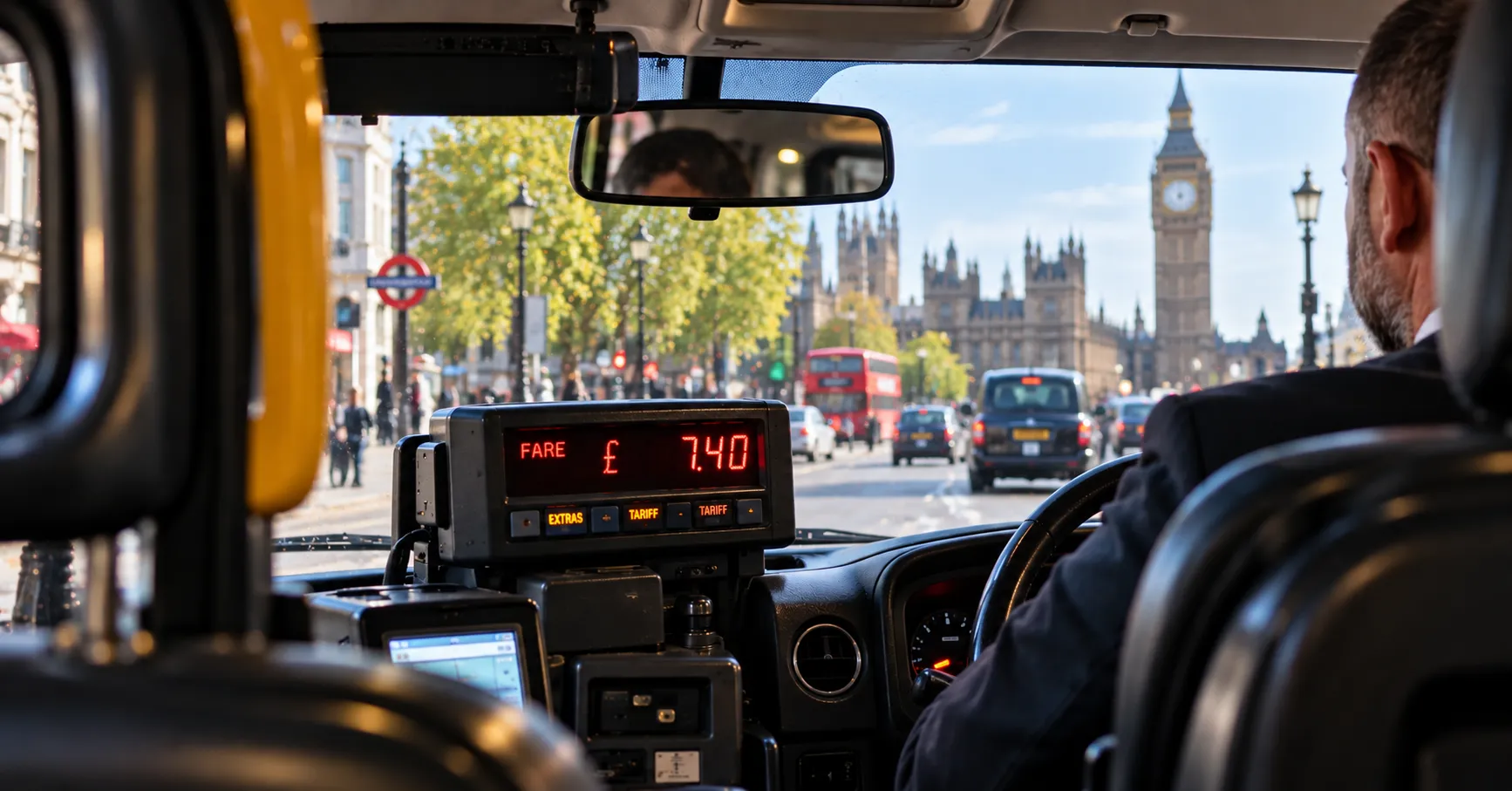
You're staring at a taxi app or a rank of black cabs, and the only number that matters right now is the one about to appear on the meter. Ten miles doesn't sound far.
But depending on the city, the time of day, and whether you're in a metered cab or a pre-booked car, that same ten miles can cost you anywhere from £20 to £75.
Taxi fares in the UK aren't set by one national rate card. Each council fixes its own tariff, London runs on a completely separate system, and app-based rides add another pricing layer on top.
That's why two people can take an almost identical ten-mile trip on the same evening and pay very different amounts.
This guide answers how much does a taxi cost per mile in the UK using real council tariffs, and explains why the fare can move mid-journey and why more passengers now book a fixed price instead.
Breaking Down How Much a Taxi Costs Per Mile in the UK

Day-rate taxis in England typically charge between £1.80 and £3.00 per mile, based on official council tariffs. Run that rate out to 10 miles, and you land at roughly £20 to £33 for the same trip.
At night, on Sundays, or on bank holidays, the per-mile rate usually climbs by roughly 30% to 50%, which pushes that 10-mile trip higher too.
In London, the per-mile cost runs higher still, often working out to £55 to £75 or more over 10 miles, because the meter also charges for time spent stuck in traffic, not distance alone.
These aren't estimates pulled from thin air. They're calculated directly from the same maximum fare tables that determine how much a taxi costs per mile in each area, and they're worth knowing before you ever step into a cab.
Quick Summary: UK Taxi Cost Per Mile
- Day rate per mile: typically £1.80 to £3.00
- 10 mile day fare: roughly £20 to £33
- Night, Sunday and bank holiday rate: usually roughly 30% to 50% higher
- London over 10 miles: often £55 to £75 or more
A Quick Day-Rate Example
Bournemouth, Christchurch & Poole (BCP) Council's current day tariff charges £5.66 for the first mile and then £2.86 per mile after that. Run the maths on 10 miles, and you land on roughly £31.40, before waiting time or extras.
That single example shows how quickly a low starting fare adds up once the meter keeps running for the full distance. It's exactly this kind of unpredictability that's pushing more passengers toward booking a fixed price upfront instead.
How Taxi Fares Are Calculated in the UK
You might be wondering how much a taxi costs per mile before you even reach a full 10 miles. It comes down to a legal document most passengers never think to look at.
Section 65 of the Local Government (Miscellaneous Provisions) Act 1976 gives district councils the power to fix the rates or fares for hackney carriages within their area.
That table of fares sets the maximum a licensed taxi can legally charge on the meter, not a suggested price.
The Three Standard Tariffs
Almost every English council runs the same basic structure, just with different figures:
- Tariff 1 (day rate): usually runs from 6 am or 7 am until somewhere between 8 pm and midnight, and covers most ordinary daytime trips
- Tariff 2 (night rate): applies through the small hours plus Sundays and bank holidays, typically 25% to 50% higher than Tariff 1
- Tariff 3 (Christmas and New Year): the highest rate on the card, reserved for the busiest, least sociable hours of the year
Waiting time, extra passengers, and bulky luggage can all add small surcharges on top of whichever base tariff applies.
Why Your Council Sets the Maximum, Not the Driver
A driver is legally allowed to charge less than the published table of fares, but very few do so outside special offers. The table exists to protect you from being overcharged, not to guarantee a specific price on the day.
London works differently again. Taxi and private hire services in London are licensed and regulated by Transport for London rather than a local council.
The black cab minimum fare rose by 20 pence to £4.40 from 25 April 2026.
Real Per-Mile Taxi Rates From Official Council Tariffs
Here's how much a taxi costs per mile from four different councils' own published tariffs, and what that works out to over 10 miles.
| Council | Per-mile rate (day) | Per-mile rate (night) | Day-rate 10-mile fare | Night-rate 10-mile fare |
|---|---|---|---|---|
| Arun District Council | £3.00 | ~£4.50 | ~£32.50 | ~£48.75 |
| BCP Council | £2.86 | £3.82 | ~£31.40 | ~£41.90 |
| South Oxfordshire District Council | £2.70 | £3.50 | ~£29.70 | ~£38.20 |
| South Holland District Council | £1.80 | £2.40 | ~£20.55 | ~£27.40 |
Figures calculated from each council's currently published table of fares and rounded to the nearest 10p. Local tariffs are reviewed periodically, so always check the current card displayed inside the vehicle.
Here's the thing, though: these are all legal maximum fares in fairly ordinary towns and small cities. None of them is in London, and none includes app-based surge pricing.
The spread between the cheapest and priciest council here is already over £10 for the same distance.
Does the Type of Taxi Change How Much a Taxi Costs Per Mile?

Yes, the vehicle class matters almost as much as the council you're in when it comes to how much a taxi costs per mile. A standard saloon is the baseline every published tariff is built around.
Estate cars, executive saloons, and larger MPVs typically carry a higher per-mile rate or a separate surcharge, since local operators price bigger or higher-spec vehicles at a premium.
If you need extra boot space or seating for five or more, expect the 10-mile figure in the table above to climb accordingly, sometimes by 20% or more.
Why Your 10-Mile Fare Can Change Mid-Journey
The number on the meter when you get in is rarely the number you'll pay at the end. Several things push it up before you arrive:
- Traffic and waiting time. Most meters switch to a per-minute charge once the vehicle drops below roughly 10mph, so a jam adds cost even though you haven't covered any extra ground.
- Crossing a tariff boundary. Set off at 11.55 pm on a day-rate journey, and the higher night rate can kick in for the rest of the trip once the clock strikes midnight.
- Extra passengers or luggage. Several councils add a small surcharge for a fifth passenger or unusually bulky items.
- Airport pickup or drop-off fees. Ranks at major airports often add a fixed extra on top of the metered fare shown on the table.
A 10-mile cross-city run during evening rush hour, say Manchester's ring road at 5.30 pm, can easily take twice as long as the same route at 10 am.
Since the meter charges for that extra time, the fare rises even though the mileage stays identical, which is usually where a fixed price, agreed before you set off, earns its keep.
Metered Taxi vs Fixed-Price Transfer: What's the Real Difference?

A metered taxi prices the journey by working out how much a taxi costs per mile and multiplying it by the distance you travel.
A fixed-price transfer prices the trip, agreed before you get in the car, regardless of traffic, the route taken, or how long it ends up taking.
Ten miles is exactly the distance where this starts to matter. It's far enough to run into real congestion, but not so far that a delay becomes a rounding error on the final bill.
This is usually where a fixed price comes out ahead on peace of mind, even when it isn't the lowest number on paper.
Companies that specialise in pre-booked transfers, such as Manchester 24/7 Transfers, quote the full price upfront, so a hold-up on the motorway doesn't change what you actually pay.
Pre-booking also saves time at the terminal, on top of the price certainty. For longer, fixed-distance routes, that certainty tends to matter even more.
| Destination from Manchester Airport | Essential fixed fare (Saloon) |
|---|---|
| Liverpool | £70 |
| Blackburn | £75 |
| Sheffield | £80 |
| Wakefield | £97 |
| Leeds | £106 |
| Blackpool | £107 |
| Harrogate | £133 |
These are Essential-tier starting prices and can change, so it's worth getting an instant fixed price through the quote request form for your actual date and postcode rather than relying on a published table.
Want to know the exact cost before you set off?
Ride-Hailing Apps and Minicabs, How Do They Compare on a 10-Mile Trip?
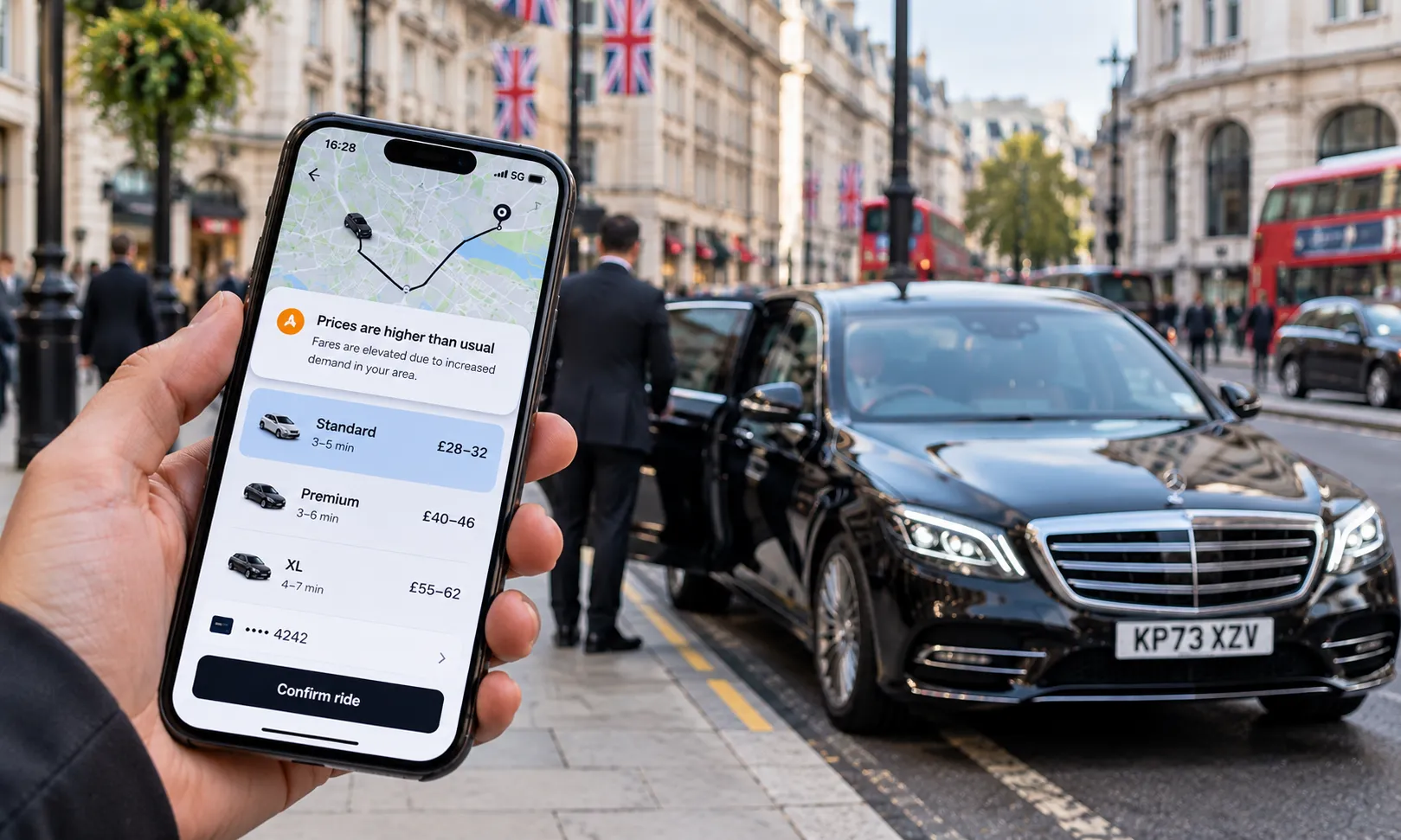
Bottom line? App-based rides can undercut a metered taxi off-peak, and cost noticeably more than either option once surge pricing kicks in.
Minicabs and private hire vehicles, ride-hailing apps included, generally show a price estimate before you book rather than running a strict meter.
That estimate can still move if the driver hits significant delays or the app applies demand-based pricing partway through your trip, adding hidden costs that a fixed-price transfer avoids.
In practice, the trade-off comes down to which risk you'd rather carry. A metered taxi carries a traffic risk, but a fixed legal maximum rate. An app-based ride carries surge risk but usually shows a price upfront.
A pre-booked fixed-price transfer removes both risks, at the cost of booking ahead rather than hailing on the spot. That's exactly why it tends to be the more reliable option for planned journeys like airport runs or regular commutes.
Tips to Avoid Overpaying on a 10-Mile Taxi Journey
A few simple habits keep your 10-mile fare close to the tariff card instead of creeping past it.
10-Mile Fare Checklist
- Check the tariff card. It's legally required to be displayed inside every licensed taxi, and it tells you exactly which rate you're being charged.
- Avoid crossing tariff boundaries when you can. A trip starting at 11.55 pm can tip into the more expensive night rate within minutes.
- Ask for an estimate before you set off, especially for airport runs or longer cross-city journeys.
- Book ahead for predictable routes. A fixed-price transfer removes traffic risk entirely for journeys you take regularly, like a weekly airport run.
- Confirm the licence badge and vehicle plate match what the driver shows you, particularly with a street-hailed cab.
The Smart Way to Handle Your Next 10-Mile Ride
A UK taxi typically costs £1.80 to £3.00 per mile during the day, which works out to roughly £20 to £33 for a ten-mile ride, more at night, and considerably more in London.
How much a taxi costs per mile depends entirely on which council's tariff you're under, what vehicle you need, and what time you travel.
If you'd rather know the exact cost before you set off instead of watching a meter climb, booking a fixed-price transfer removes that uncertainty completely, and that's exactly what Manchester 24/7 Transfers delivers on every trip.
Ready to skip the meter? Book your transfer for your next trip.
Manchester 24/7 Transfers
Fixed fares to and from Manchester Airport, no surge pricing, no hidden charges. Meet & Greet and flight tracking included as standard.
Frequently Asked Questions
Minicabs and other private hire vehicles must always be pre-booked through a licensed operator.
A note of the pickup time and route helps the council investigate.
That predictability is why more passengers now choose a fixed-price transfer over a metered taxi for pre-planned journeys like airport runs.

Simon is a Project Manager and airport transfer specialist at Manchester 24/7 Transfers. With years of experience navigating the private hire industry across Greater Manchester and the North of England, he's the mastermind behind getting thousands of passengers to Manchester Airport on time, every year. When he's not streamlining travel logistics, he's sharing his top tips for stress-free journeys and local travel insights right here on the blog.
View full profile →